New Blog 09 October 2026
My Writing Journey
I write for fun.
That’s it. That’s the main reason I do it. When it stops being fun, then that’s when I’ll stop doing it. But after twelve years, it’s more fun now than it was when I started.
As a youngster, I’d always envisaged that one day I’d give writing a try. I always have a book on the go and often dreamed about becoming an author. But then life got in the way. I left school, joined the RAF, got married, had a child, left the RAF, got a bad job, had another child, then got a great job (Greater Manchester Fire & Rescue). For a long time this new job became my obsession – I stayed with the fire service (Manchester, then Merseyside) for over 25 years.
All this time I kept reading – constantly. Just as when I was a child, I always had my head in a book, and still do. My main interest being historical fiction – in particular, the two World Wars. But I am open to anything that may happen to take my interest. Back then I read all the Alastair MacLean books, Jack Higgins and Sven Hassel too. Wilbur Smith (the early non-ghost-written stuff) was a particular favourite. And I now particularly enjoy modern writers such as Damien Lewis, Sebastian Faulks, Robert Harris and Jo Nesbo to name but a few. I’ve also been known to dabble in the classics – Dickens, Hugo, Tolstoy etc.
In fact, anything that jumps out at me – a unique tale, a fast-paced thriller, or maybe just a well-written character-based story. I will give anything a try.
Taking the Plunge
And so, around twelve years ago, after reading three pretty poorly written ‘thrillers’, one after the other, I thought to myself ‘I’m sure I can do better than that.’ So I decided to take the plunge and embarked on tackling my very first book.
Oddly, I was slightly embarrassed about writing it. I didn’t want to tell people I was doing it, for fear of being ridiculed if I didn’t finish it, or if it was as bad as the trio of rubbish I’d just had the unfortunate experience of reading. To be honest, I did it more to see if I had the patience to see the project through.
The sense of achievement and elation after finishing that book was amazing. I could do it, I realised. I could write a 90,000-word manuscript – I did have the patience after all.
But what to do with it?
The book was entitled ‘The Journal’ – I gave it to friends and family to look at – all of them offering words of encouragement – it was a great book I was told. Looking back now, it’s clear they were just being kind. The book was/is total rubbish, worse even than the three I’d read that set me on the writing path – a convoluted plot line, wooden characters, poorly written and utterly predictable. I have taken the book off sale and hopefully it will never see the light of day again!
The one good thing to come from it was that I now knew I had the patience to write a full manuscript, to see a project like this through to the end.
I queried a few agents and unsurprisingly got nowhere – the book didn’t deserve it. But I’d enjoyed the process so much, I decided to try again and write another, this time taking more care in preparation, writing style and plot development.
This second book was The Absolution of Otto Finkel – a five-part World War Two epic. (The book has since been re-edited and polished and now forms part of my WW2 France Collection, republished recently through Jelso Publications). Again, I tried to find a ‘proper’ publisher for it and, still naïve to the publishing world, fell into vanity publishing, a mistake I will never repeat. Once I realised my error, it took me a few years to regain the rights to the book, but it didn’t stop me from continuing to write more, as I now loved what I was doing.
I’d stopped querying agents and decided to self-publish my work – after all, this was a hobby at this stage, nothing more, and I was still working full-time for the Fire & Rescue Service. More books followed – Mosquitoes (a contemporary black comedy), The Sun Will Always Shine and The Worst Journey in the World, followed by Codename Greyman, a sequel of sorts to The Absolution of Otto Finkel.
During this period, I was asked to contribute a short story to an anthology about World War Two Resistance. Ten independent authors got together to write ‘The Darkest Hour’ – my own contribution being V for Victory, which has since been developed into a full novel and forms the third book in the WW2 France Collection. The anthology found its way onto the USA Today bestseller list, all proceeds being donated to the US Holocaust Memorial Centre in Washington DC.
A Chance Encounter with an Arctic Veteran
But it is probably The Worst Journey in the World that really kicked things off for me – in more ways than one. It was this book that made me think more about taking my writing seriously. The writing of it came about when my former high school English teacher and good friend, Joyce Holden, asked me to attend a talk at my local Museum in Wigan. A presentation was being given by Bill Halliwell, a Royal Navy veteran of World War Two, a man, well into his nineties, who had sailed the horrendous convoys to Russia (known as the Arctic Convoys).
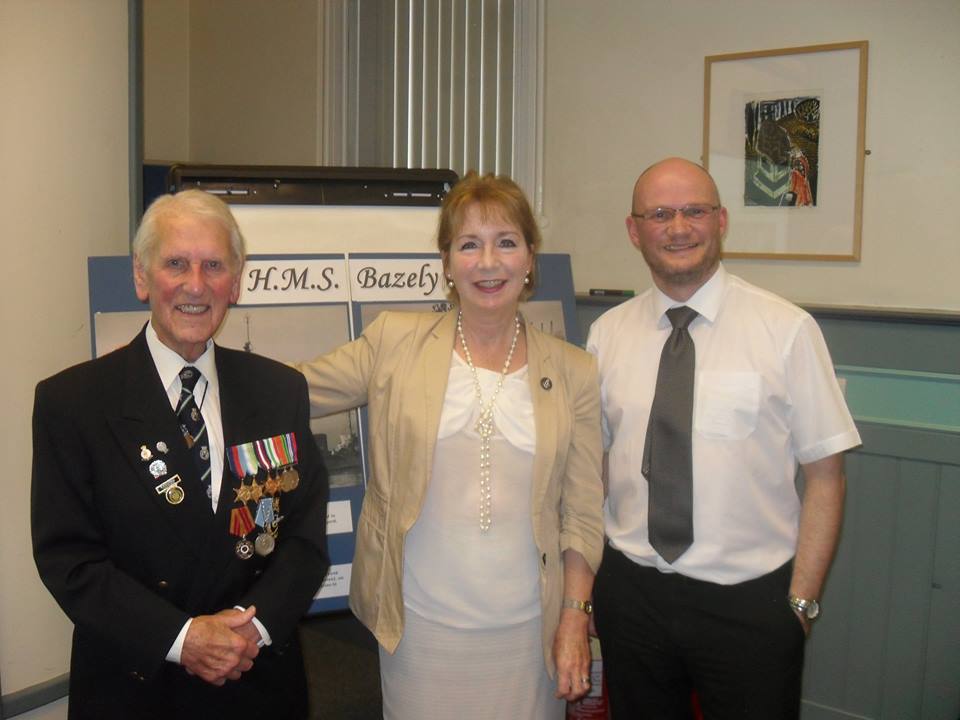
Above: Bill with Joyce and I at Wigan Museum
After speaking to Bill a couple of times, my interest in this little-known theatre of World War Two was piqued. I studied it solidly and then decided to write a novel about it, again for the sheer enjoyment of the process. The finished work is something I am very proud of.
This is where things started to get very interesting for me.
Unexpected Friendships
A few months after I published it, out of the blue, I received an email from a gentleman called Charlie Erswell. He too was a veteran of the Arctic Convoys, having sailed on eight of them, on two separate destroyers, as well as seeing service in the Mediterranean on Operation Torch, the North Atlantic, and in the English Channel during D-Day and beyond. He was full of praise for the novel, telling me it was very authentic and just as he remembered it from so long ago. Huge praise indeed, from a man who was actually there. This was music to my ears, especially as a writer of historical fiction. I had got it right!
Charlie also mentioned he lived in Halifax and told me that if I was ever passing, I should pop in for a cup of tea. Coincidentally, I would be travelling to Mansfield from my home in Wigan the following week, to visit my in-laws, and so my wife, Dawn, and I decided to stop off on the way back and pay him and his wife, Betty, a visit.
Charlie and I became firm friends very quickly, so much so, that we decided to write his wartime memoir together, and I would see about getting it published for him. But then the pandemic hit and we had to converse mostly by phone call and email. Betty was brilliant during this period, emailing many anecdotes and stories, plus other things that Charlie had remembered during the process. I would send chapters over for him to take a look at; he’d comment and ask me to amend. This back and forth worked extremely well and in the end, we had a book we could both be proud of.
The book finished, I didn’t want to just give him a self-published paperback. Charlie’s story deserved more than that. I approached Pen & Sword – specialists in publishing military history and books of this kind. Happily, they were very interested and commissioned the book to be published with them. This was my first experience of working with a traditional publisher and the experience was nothing short of brilliant – professional editors, great support and they kept me and Charlie involved throughout the whole process, including our thoughts and approval on book cover design etc. The finished book was entitled ‘Surviving the Arctic Convoys: The Wartime Memoir of Leading Seaman Charlie Erswell’.
(N.B. I later wrote a second book for Pen & Sword – a non-fiction account of the very first voyage Charlie took as an 18-year-old turret trainer on HMS Milne – the book is entitled Arctic Convoy PQ18: 25 Days that Changed the Course of the War).
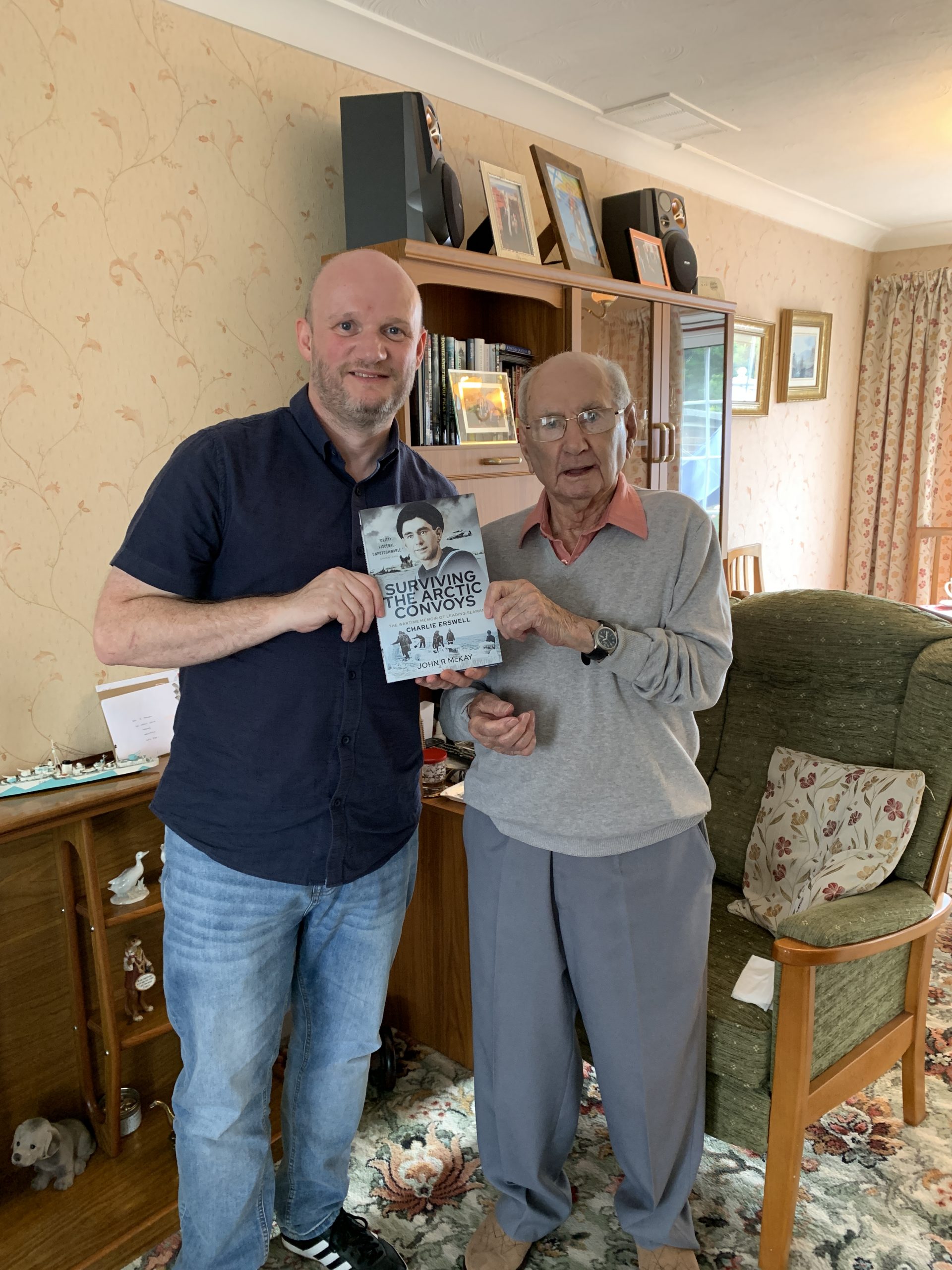
Above: Presenting Charlie with his book at his home in Halifax, 2021
Things took an interesting turn during the writing of Charlie’s memoir. During the publication phase, Pen & Sword asked me to provide photos to include in the middle of the book. Being a huge fan of Damien Lewis (SAS The Great Train, The Ministry of Ungentlemanly Warfare etc.), I contacted him through social media asking for some advice. He responded immediately and was very supportive. So much so that we continued our correspondence, and after reading his book SAS Band of Brothers, I mentioned that one of the soldiers in the book, Tom ‘Ginger’ Jones, was from my home town of Wigan, and deserved a statue, or some kind of recognition for his wartime service as one of the original members of the SAS.
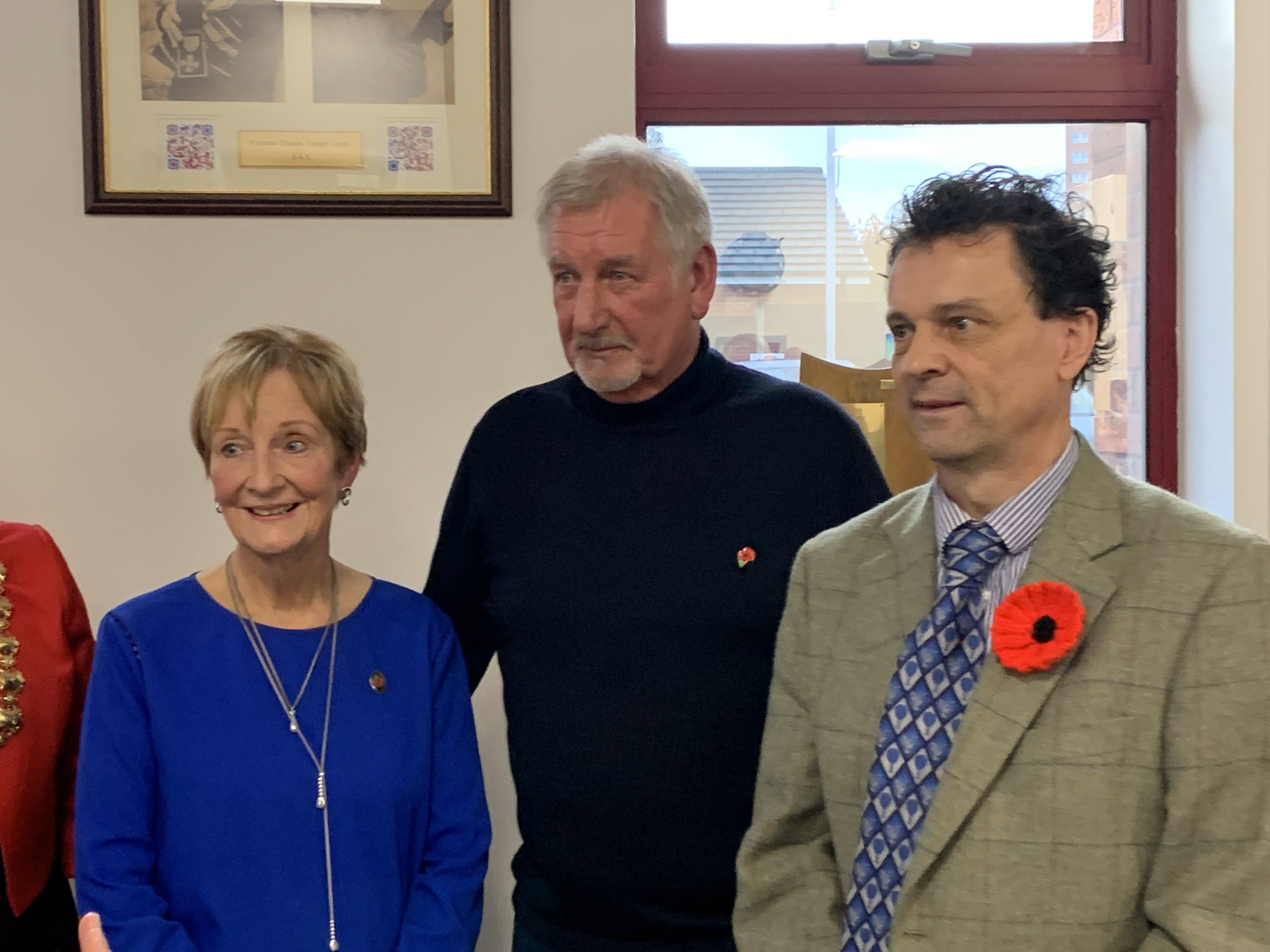
Above: Damien Lewis (right), at the unveiling of the plaque honouring Tom ‘Ginger’ Jones at the Wigan Armed Forces Centre. He is pictured with Ginger’s son, Norman, and daughter, Glenys. The event marked the culmination of efforts to recognise the wartime service of one of the original members of the SAS.
In conjunction with Wigan Council, Norman Jones (Ginger’s son) and the rest of the Jones family, we managed to organise a plaque in honour of Ginger at the Wigan Armed Forces Centre. Damien was kind enough to travel up from Dorset for the unveiling and gave a talk on Ginger to the assembled group, which included the Mayor of Wigan and other civil dignitaries, as well as Ginger’s family members and those of other men who had served with Ginger during the war.
Damien and I have become good friends. He remains very supportive of all my writing endeavours, offering cover endorsements among many other things. I also occasionally carry out research work for him.
Finding my Writing Home
But back to The Worst Journey in the World. Being a subscriber of Aspects of History magazine, I decided to enter the book into their Unpublished Historical Novel Competition in 2022. That November, I was delighted to hear that it had won!
Part of the prize was the opportunity to have the book published with an independent publisher. Of course, I jumped at the chance. However, I was persuaded to drop my middle initial from my author name, and to retitle the book ‘Hell and High Water’. I was reluctant to do either of these things (the original title was attributed to Winston Churchill when describing the Arctic Convoys), but went with it.
I was also asked to write a trilogy of novels set during World War Two – I decided on the British airborne forces, which had always fascinated me – this is the Manner of Men series.
The series has now stretched to five novels and I am currently working on the sixth and final one – Assignment Berlin.
I have recently changed publishers – moving to the brilliant Sapere Books – and all the novels in the series, together with The Worst Journey in the World (which has reverted to its original, and, in my view, much better, title), will be republished by Sapere.
I have also been contracted to write a series of World War Two naval thrillers, which I can’t wait to get started on.
It’s been a long journey to get here, but I know I have found my writing home, with a publisher who looks after their authors.
And so, twelve years on, I’m still doing what I set out to do in the first place – writing stories that I enjoy, learning as I go, and looking forward to whatever comes next. After all, as I said at the beginning, I write for fun.
And long may that continue.
________________________________________________________________________________________________________
Welcome to my blog, where I’ll be sharing the latest news about my writing, books and everything else that goes on behind the scenes.
I’ll post updates about new releases, projects I’m working on, publishing news, events and some of the people and stories I encounter along the way. I’ll also occasionally share an article or two on subject that I think might interest readers – particularly those with an interest in the Second World War and the history behind my books.
Some posts may be about writing and research; others might simply be something I’ve come across that I think is worth sharing.
So, if you enjoy my books and would like to keep up with what I’m working on, or perhaps discover something new along the way, I hope you’ll drop by from time to time.
To start off, below is an article I’ve posted to my Substack account, about the Vercors Uprising in southeast France in July of 1944 – the uprising is covered in my novel, Codename Greyman.
John
THE VERCORS UPRISING – WHEN THE FRENCH RESISTANCE DECLARED INDEPENDENCE
In July 1944, thousands of Maquisards, French Resistance fighters, rose up on the Vercors Massif, believing Allied support was on its way. It never came.
At 23:15 hours on 5 June 1944, a broadcast was made from the BBC in London. It was the second part of the poem Chanson d’Automne – “Blessent mon coeur, d’une langueur monotone” (“wound my heart with a monotonous languor”). To Resistance leaders across France, the message was clear: the Allied invasion was imminent.
Their task was to tie up German forces and prevent them from being used against the Allied armies. On the Vercors Massif, a plateau just south of Grenoble in south-eastern France, it was something the Resistance had been waiting for for four years.
The Vercors Uprising had begun.
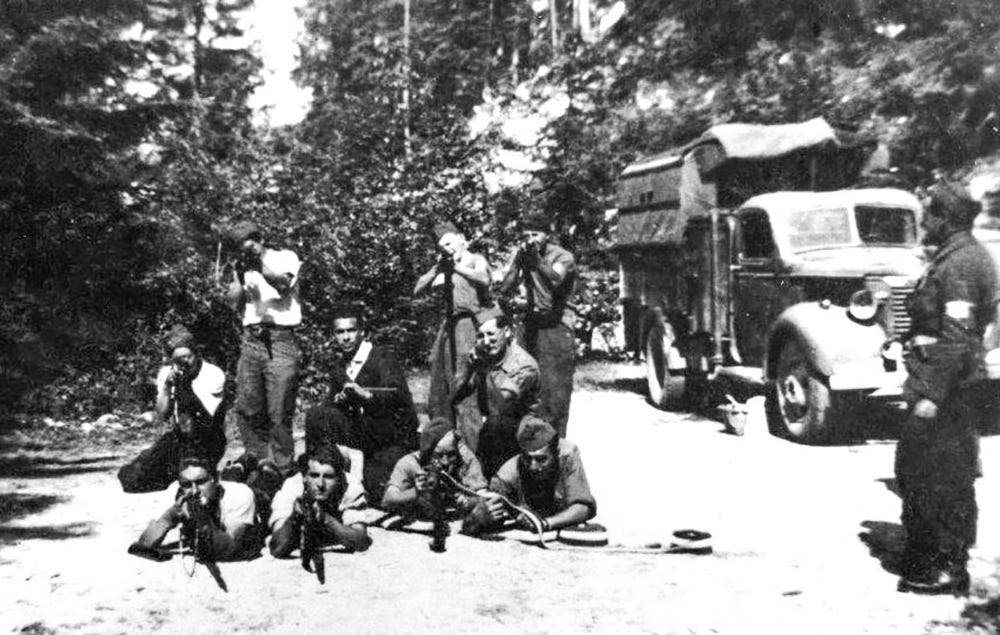
The Maquis
Scattered around the plateau were a number of camps containing large groups of maquisards, armed young patriots led by former French Army officers. Over the previous few years, their numbers had grown to more than four thousand. But only a handful, 10%, had any military training.
Many had taken to the hills rather than submit to the humiliation of the STO (Service du Travail Obligatoire), the forced labour programme agreed by the Vichy government with its Nazi masters in Berlin. Under the scheme, French men were sent to Germany to work in support of the Nazi war effort. Rather than comply, thousands fled into the countryside and mountains, joining the Maquis in areas such as the Vosges and Vercors. Many others escaped to North Africa to join the Free French.
This Substack is reader-supported. To receive new posts and support my work, consider subscribing or following.
With conflicting messages coming from London, Algiers and Resistance leaders within France itself, de Gaulle’s call to arms was interpreted by many as an instruction to act immediately. It was a decision that went against the preference of the Allied commander, General Dwight D. Eisenhower, who wanted such uprisings delayed until Allied forces were much closer.
Those on the Vercors believed the plateau was an ideal location from which to begin an insurgency, provided it could be supported with reinforcements and heavy weaponry flown in from North Africa.
The Maquis commander on the Vercors, François Huet, was subsequently ordered by Marcel Descour, the regional Resistance leader, to mobilise his forces and begin an uprising. Despite his reservations, Huet was assured that the troops and equipment he needed would be forthcoming.
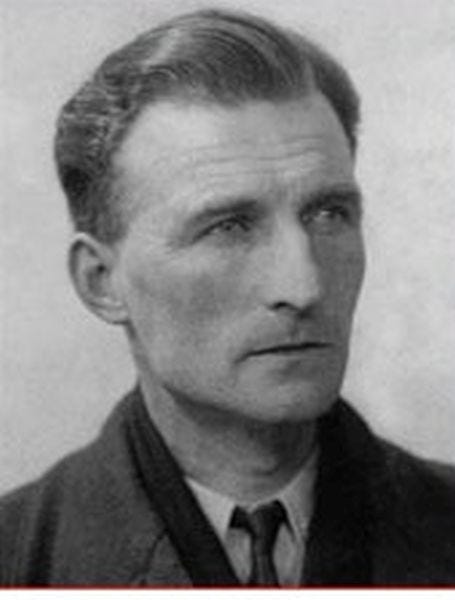
In preparation, large groups of maquisards and civilians were used to construct an airstrip just outside the main town of Vassieux-en-Vercors.
The Germans Attack
The Germans were, of course, aware of the Maquis presence in the hills. On 11 June they sent troops into the northern village of Saint-Nizier, capturing it and the surrounding area. However, the Maquis remained in control of most of the plateau, while Huet desperately attempted to arm and train his fighters.
Then, on 4 July, the Maquis leadership declared the Vercors independent of German and Vichy rule. The Tricolore and Cross of Lorraine were flown from towns and hamlets across the massif.
The passes and roads leading onto the plateau were defended by groups of Maquisards, intent on holding the area until the reinforcements they believed were coming arrived.
The Germans responded with a series of aerial attacks, launched by aircraft operating from the nearby air base at Chabeuil.
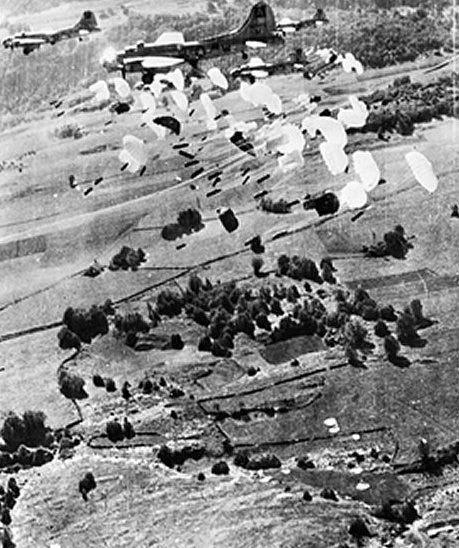
Eventually, on Bastille Day, 14 July, some of the assistance the Maquis had requested arrived. A USAAF airdrop delivered small arms, ammunition, clothing, medicines and food. But the troops and heavy weapons they had been promised did not come. Many of the containers also fell outside the intended drop zone and could not be recovered.
The Main Assault
The Maquis were increasingly isolated.
On 21 July 1944, the Germans launched their full-scale assault. German forces pushed onto the plateau from the captured village of Saint-Nizier while simultaneously attacking the passes and roads to the south, east and west.
At the same time, German glider-borne troops landed on the newly constructed airstrip at Vassieux-en-Vercors.
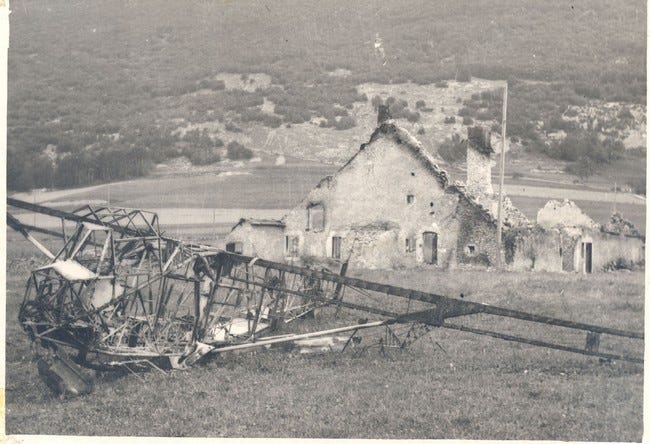
More than ten thousand battle-hardened German troops were soon moving onto the plateau. The Maquisards, poorly equipped and with limited military training, were simply unable to withstand the assault.
Desperate pleas for assistance to Algiers and London went unanswered.
It soon became clear to Huet that the plateau could not be defended. He ordered his men to abandon their fixed positions and withdraw into the hills and forests of the massif.
By 25 July, the uprising had been crushed.
But the Germans did not stop there.
Reprisals
Following their victory, they carried out a series of brutal reprisals. Captured Maquisards were summarily executed, while villages and hamlets were burned and their inhabitants massacred.
At the Grotte de la Luire, a large cave being used as a first-aid station, wounded Resistance fighters were murdered where they lay.
Vassieux-en-Vercors, scene of some of the heaviest fighting, was systematically destroyed.
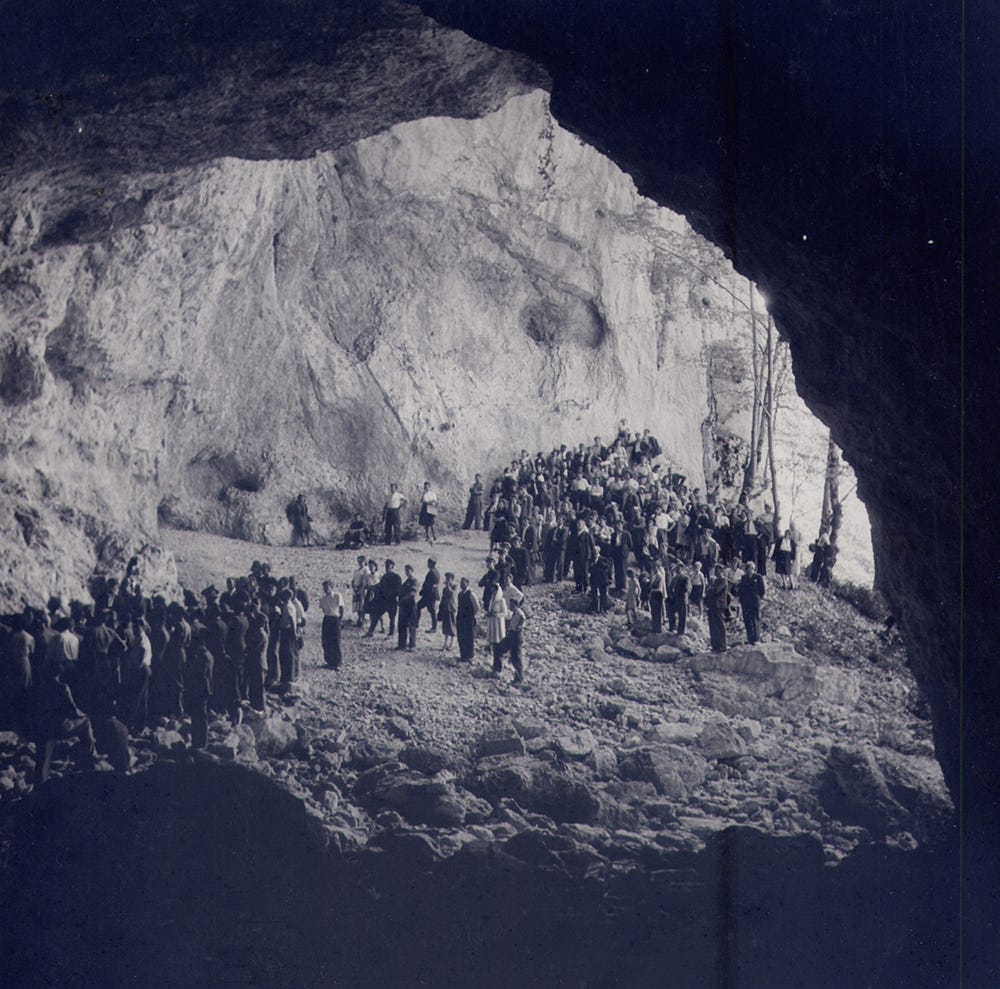
The Vercors uprising had been doomed from the moment its leaders decided to defend the plateau as a conventional battlefield. Four thousand ill-equipped maquisards could not hope to withstand a force of perhaps ten to twelve thousand experienced and well-equipped German troops.
Guerrilla warfare, using the terrain of the massif to its full advantage, might have offered a different prospect.
Yet the greatest problem was the expectation of Allied support. The Maquis leadership had been led to believe that reinforcements and heavy weapons would arrive from North Africa. They did not.
Why that support failed to materialise has been debated ever since. Explanations have ranged from failures of communication and military planning to the competing demands of the wider Allied campaign.
The most practical explanation may have been that Allied resources were already being concentrated for the forthcoming invasion of southern France, Operation Dragoon.
The Vercors would ultimately be abandoned by the Germans following the Allied landings in southern France in August 1944. But for the men and women of the plateau, the cost of the uprising had already been paid.
__________________________________________________________________________________________________________
Recent Comments